
-
+1 - 312-224-1615
Get in touch with us
-
support@helpwithassignment.com
Send us an e-mail
Solution Library
Comparative Study on Accounting Policies of Qantas Airways Ltd and Singapore Airlines Ltd
Question
Case Study: Qantas Airways Ltd and Singapore Airlines Ltd
This comparative study of accounting policies adopted by two international airlines for the depreciation of aircraft, spares and spare engines provides an insight into the differences in accounting policy that may emerge, even when accounting practice in the jurisdictions involved is regulated.
Key concepts involved are as follows:
- Non-current assets
- Depreciable amount
- Depreciation
- Useful life
- Comparability of results
- Financial statement analysis
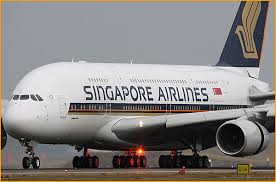
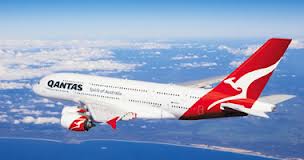
Qantas Airways Ltd (Qantas) and Singapore Airlines Ltd (Singapore) both operate in the international aviation industry. The former is Australia’s largest airline, having been formed in 1920 in outback Queensland as the Queensland and Northern Territory Aerial Service Ltd (now Qantas). Singapore was formed in 1972, although its origins date back to 1947, and is based in south-east Asia, operating from the city-state of Singapore at the Changi Airport.
Both companies operate diverse airline fleet. Aircraft, spares and spare engines collectively constitute a major asset of such corporations as is demonstrated by reference to the 2011 statements of financial position of these two companies. In the case of Qantas, this non-current asset, shown as ‘Property, Plant and Equipment’ at the stated carrying value of AUD$9753.7 million as at 30 June 2011. For Singapore, this ‘fixed’ asset category, disclosed as ‘Aircraft, spares and spare engines’ at a carrying value of S$12464.5 million, constituted 62.4 per cent of total group assets as at 31 March 2011 of S$19990 million. Accordingly, the accounting policies adopted in depreciating such assets over their useful lives assume importance in assessing the financial performance and position of airline operators.
In the case of Qantas, the ‘Depreciation and amortisation’ policy for aircraft, spares and spare engines was disclosed in Note 1(n) for the ‘Notes to the financial statements’ for the year ending 30 June 2011. The relevant portion of this note is reproduced below:
Depreciation (Qantas)
Depreciation is provided on a straight-line basis on all items of property, plant and equipment except for freehold and leasehold land. The depreciation rates of owned assets are calculated so as to allocate the costs or valuation of an asset, less any estimated residual value, over the asset’s estimated useful life to the Qantas Group. Assets are depreciated or amortised from the date of acquisition or, in respect of internally constructed assets, from the time an asset is completed and held ready for use. The costs of improvements to assets are depreciated over the remaining useful life of the asset or the estimated life of the improvement whichever is shorter. Assets under finance lease are amortised over the term of the relevant lease or, where it is likely the Qantas Group will obtain ownership of the asset, the life of the asset.
The principal asset depreciation and amortisation periods and estimated residual value percentages are:
|
|
Years |
Residual Value % |
|
Jet Aircraft and engines |
20 |
0-20 |
|
Non-jet Aircraft and engines |
10-20 |
0-20 |
|
Aircraft spare parts |
15-20 |
0-20 |
These rates are in line with those for the previous year, with the exception of the residual value assumption on wide-bodied aircraft, which was revised from 25% to 20%.
Depreciation rates and amortisation rates and residual values are reviewed annually and reassessed having regard to commercial and technological developments and the estimated useful life of assets to the Qantas Group.
On the other hand Singapore reported its policy to the ‘Depreciation of fixed assets’ at Note 2(g), entitled ‘Accounting policies’. The portion of this note pertaining to aircraft, spares and spare engines is reproduced hereunder:
Depreciation of Fixed Assets (Singapore)
Fixed assets are depreciated on a straight-line basis at rates that are calculated to depreciate their cost to their estimated residual values at the end of their operational lives. Operational lives and residual values are reviewed annually in light of experience and changing circumstances.
Fully depreciated assets are retained in the financial statements until they are no longer in use. No depreciation is charged after assets are depreciated to their residual values.
Aircraft Fleet
The following table gives information relating to Singapore’s calculation of useful life and residual values of its aircraft fleet and associated spare parts.
|
|
Years |
Residual Value % |
|
Passenger Jet Aircraft (New) |
15 |
10 |
|
Freighter Aircraft (New) |
15 |
20 |
Please Note:
AUD = Australian Dollars
S = Singapore Dollars
Qantas Airways Ltd 2011 Financial Report
https://www.qantas.com.au/infodetail/about/investors/2011AnnualReport.pdf
Singapore Airline Ltd 2011 Financial Report
https://www.singaporeair.com/pdf/Investor-Relations/Annual-Report/annualreport1011.pdf


Required:
Students need to address the following Case Study 2 questions.
- Compare and contrast the depreciation accounting policies of Qantas and Singapore for the years ended 30 June 2011 and 31 March 2011 respectively and comment on the comparability of the results reported.
- What guidance is provided under relevant accounting pronouncements (standards, policies, legislation) in estimating useful lives and salvage values of long-lived assets (such as jet aircrafts).
What key aspects must companies keep on mind when estimating these useful lives and salvage values?
- What would be the impact, on Qantas’s financial reports, and on you as a potential investor comparing Qantas’ performance with that of Singapore, if Qantas used the reducing balance method of depreciation instead of the straight-line method?
- Qantas has recently acquired the Airbus A380, the biggest passenger jet ever built. Different from other aircraft in Qantas’ fleet, the Airbus A380 uses composite materials (such as carbon-fibre reinforced plastic) for greater durability of its airframe. The engines that provide the necessary thrust are also newer, more powerful variants of their predecessors used on planes in Qantas’ existing fleet.
Given the information above, answer the following questions;
a). What difficulties may Qantas face in estimating the useful life and salvage value of the Airbus A380?
b). What information, as a user of financial statements, would you want about this acquisition in the financial reports, if any at all?
Summary
This question is related to a case study on accounting and discusses about accounting policies adopted by two international airlines for the depreciation of aircraft, spares and spare engines provides an insight into the differences in accounting policy.
Total word count: 1682
Download Full Solution
WHAT OUR STUDENTS SAY
The most fascinating thing about HwA is that they are very flexible in their approach. For instance when in order to incorporate my professor’s feedback I requested them to alter my existing assignment solution, they did it without hesitation and with no extra charge.

Paul Watkins Student
Writing the final year dissertation paper was a big deal for me as it is the ultimate decider for my grades. Needless to say that I was very nervous but I got immense help from HwA throughout the tenure and helped me get a solid A at the end of everything.

Leslie Scanlon Student
I was struggling with the deadlines of my assignments and increasingly felt at a loss with my undergrads law program at the Victoria Law College. 24 hours in a day were not enough to do the research and structure the assignment essay. At TheReliableTutor the tutors understand my deadlines and I have never had them delay.

Alison Tait Student
During the third semester of my micro-biology course I was challenged by this very difficult protein content calculation in DNA assignment where I seriously needed help from some expert. Then only I came across HwA and found out how knowledgeable their experts are. They worked on my stuff and helped me understand the formula used in the assignment.

Derek MacLauchlan Student
I was looking for help writing my case study on Stock Valuation. The case study needed specific stock valuation analysis work and I needed someone with good hold on the subject to write the case study analysis. At HwA I was paired with a finance assignment expert who had extensive industry experience. The quality of the assignment was absolutely brilliant and helped me score an A.

Tim Branagh Student


Comments
this is a very good website
I have 50 questions for the same test your page is showing only 28
hi can you please help or guide me to answer my assignments. thanks
hi can anyone help or guide me to my assignments. thanks
This solution is perfect ...thanks
Hello Allison,I love the 2nd image that you did! I also, had never heard of SumoPaint, is something that I will have to exolpre a bit! I understand completely the 52 (or so) youtube videos that you probably watched. Sometimes they have what you want, sometimes they don't! However, it is always satisfying when you are able to produce something that you have taught yourself. Great job!Debra 0 likes
Perfect bank of solution.
great !
thanks for the quick response. the solution looks good. :)
thnx for the answer. it was perfect. just the way i wanted it.
works fine.